Belgium seemed to be a relatively accessible destination that was easy to travel around by train (and wheelchair). So we set off for a week to explore Brussels, stopping in Lille, Bruges, Ghent and Antwerp.
Day 1: Arrival in Brussels
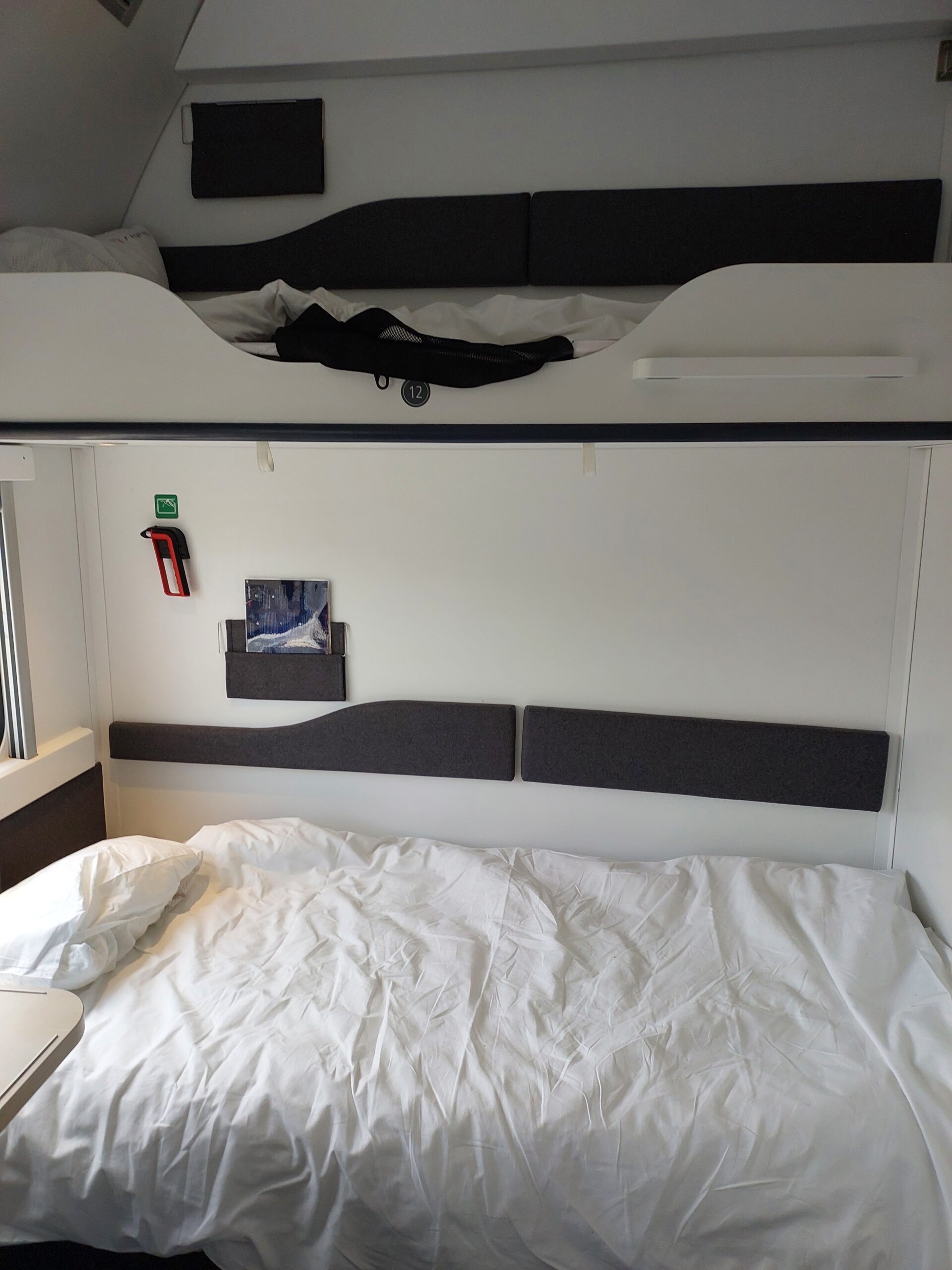
Apart from the three-hour delay, the journey on the night train from Vienna went well. A private compartment for two people, wheelchair-accessible and located next to an accessible toilet: what more could you ask for, other than arriving on time?
As we already knew Brussels, we did not explore the city as extensively as we had on our first visit.
Nevertheless, we took advantage of our first day to revisit the historic centre, which was less accessible than I remembered: lots of uneven cobblestones, steep slopes and narrow pavements. The Church of Our Lady of the Sablon, the Grand-Place, the Town Hall and Manneken-Pis: we revisited the classics before ending the afternoon with a beer and a Coke at the Beer Lab Rooftop, which has good wheelchair access via a lift.
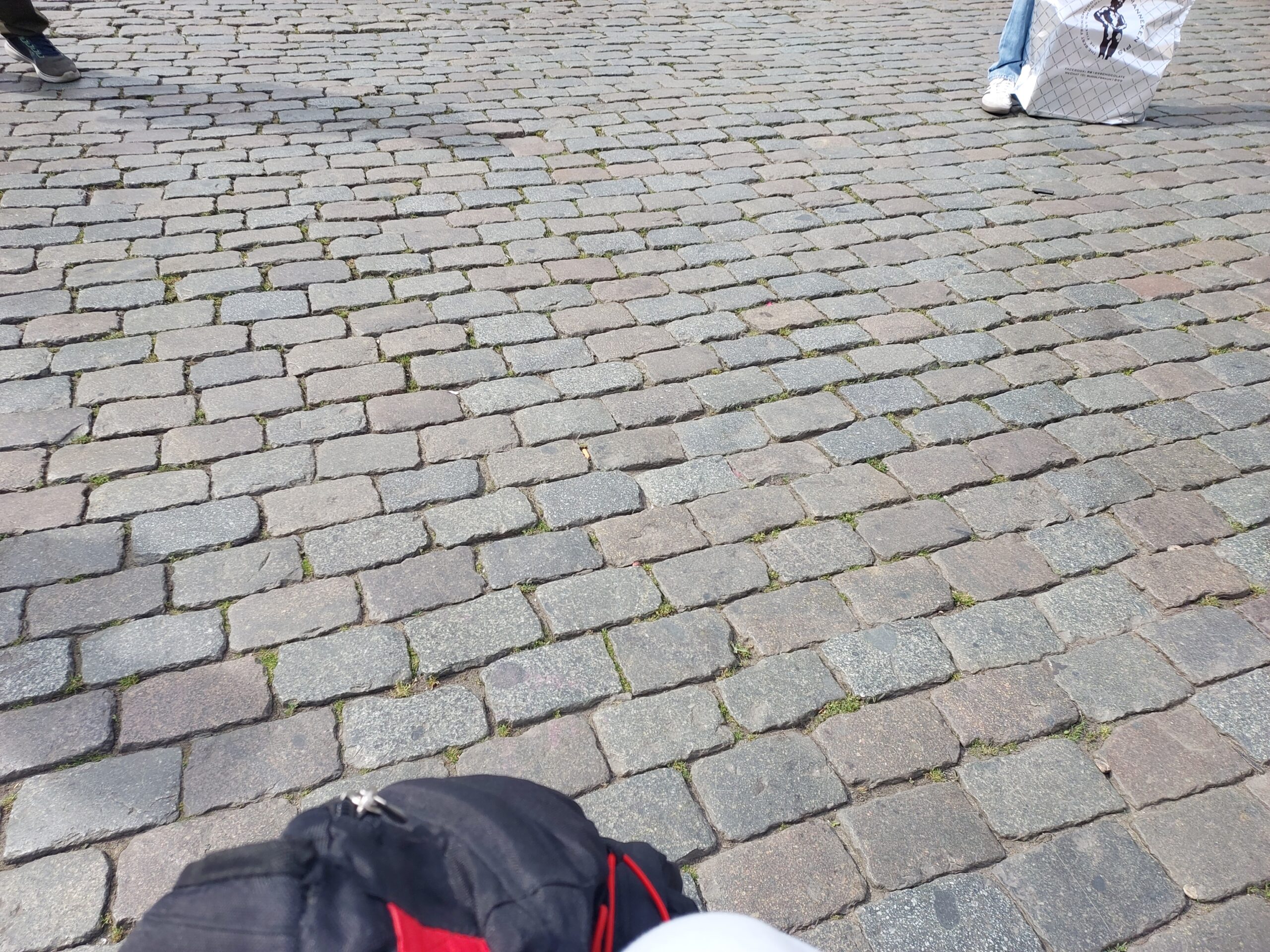
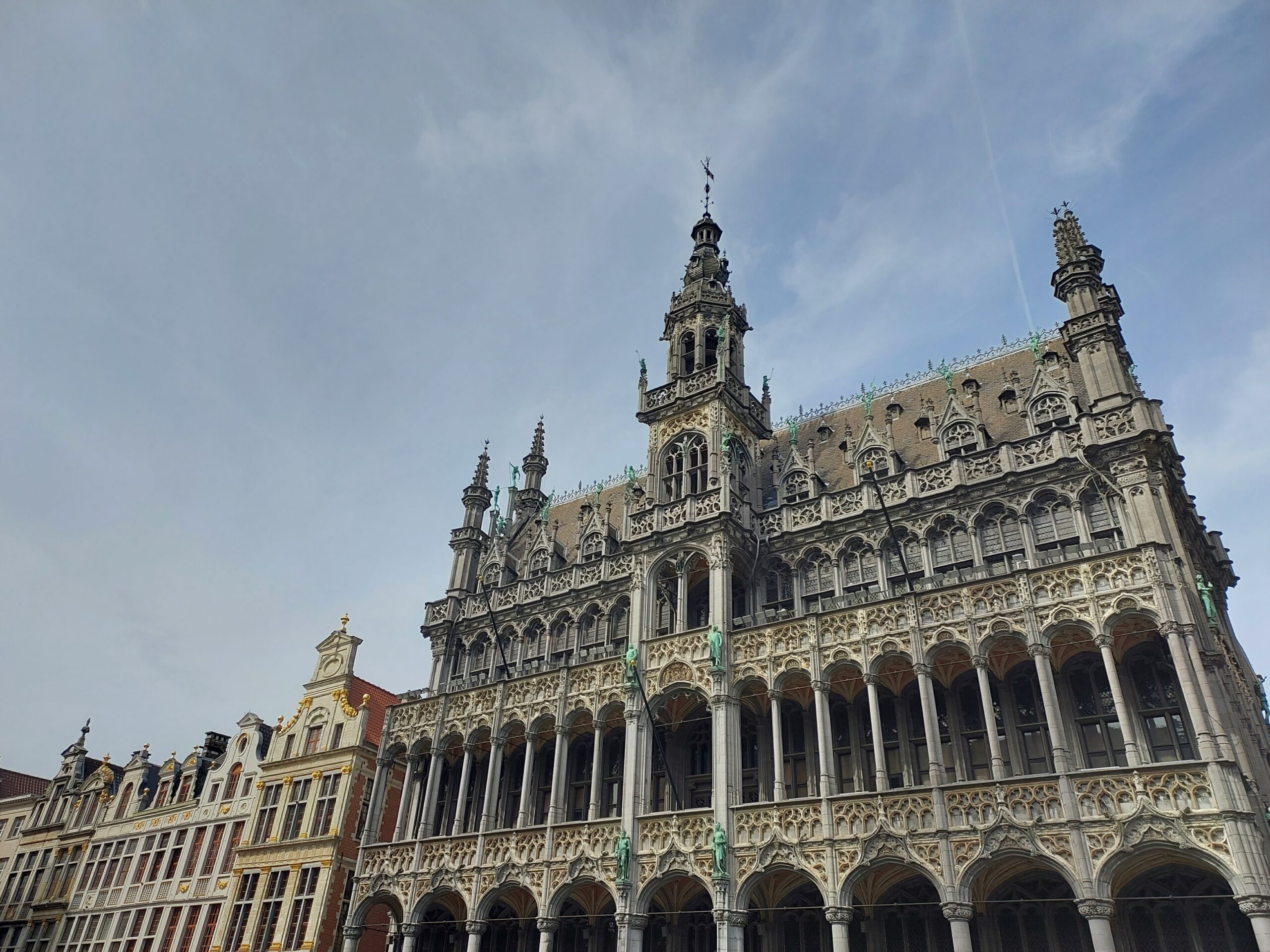
Grand Place and its cobblestones…
Day 2: Brussels
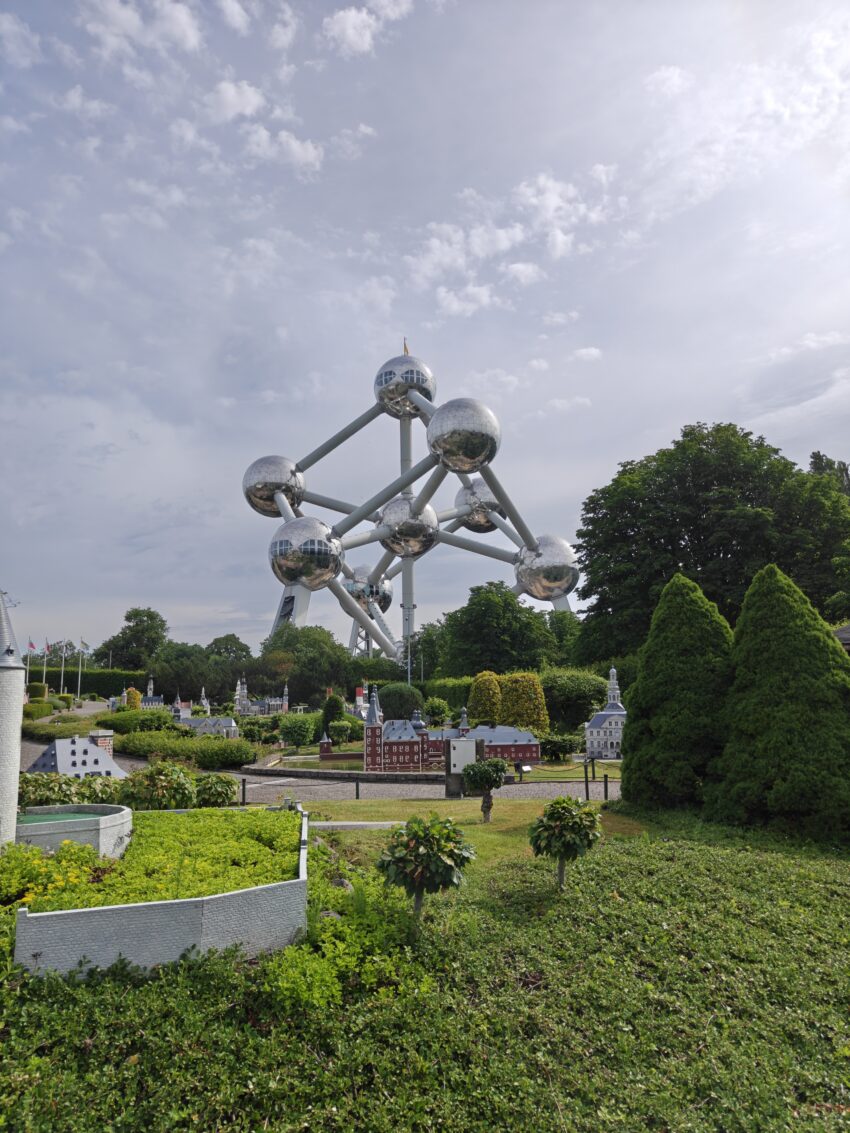
We begin our second day in Brussels with a visit to Mini-Europe because – surprise – it is not raining 😊 Everything has been well designed for pushchairs and wheelchairs. The walk takes us past miniature versions of various monuments from European Union countries, although I have to admit that partially choosing some relatively unknown monuments instead of more famous ones does not always seem very logical to me.
We continue to the Atomium, where one of the spheres is accessible by lift. It offers a fairly nice view of Brussels.
As the Design Museum Brussels is just a stone’s throw away and included in the Atomium admission price, we take a look around. It has the advantage of having accessible toilets, which is very convenient.
We then try the metro to return to central Brussels: most stations are wheelchair-accessible, including the one where we need to get off.
After a well-deserved lunch, we continue to the Magritte Museum. During our visit, we first have to collect the tickets from the Museum of Fine Arts before heading to the adjacent Magritte Museum. Across three floors, we discover how Magritte’s work evolved and soon encounter his surrealist paintings with their extravagant titles.
We end the day with an ice cream in the Royal Saint-Hubert Galleries, which are also wheelchair-friendly, although the ramp used to access them consists of a makeshift plank.
Day 3: Lille
A short day trip to Lille, mainly to see friends, but also to explore the historic centre of this charming city in northern France, 40 minutes from Brussels by train. Cobblestones and narrow pavements abound, but they do not prevent us from enjoying a very pleasant break at Meert, which has the advantage of having an accessible terrace.
Our exploration of Lille remains fairly brief, as the day is primarily devoted to our friends. We then take the train to Ghent, where we spend the night.
Day 4 : Bruges
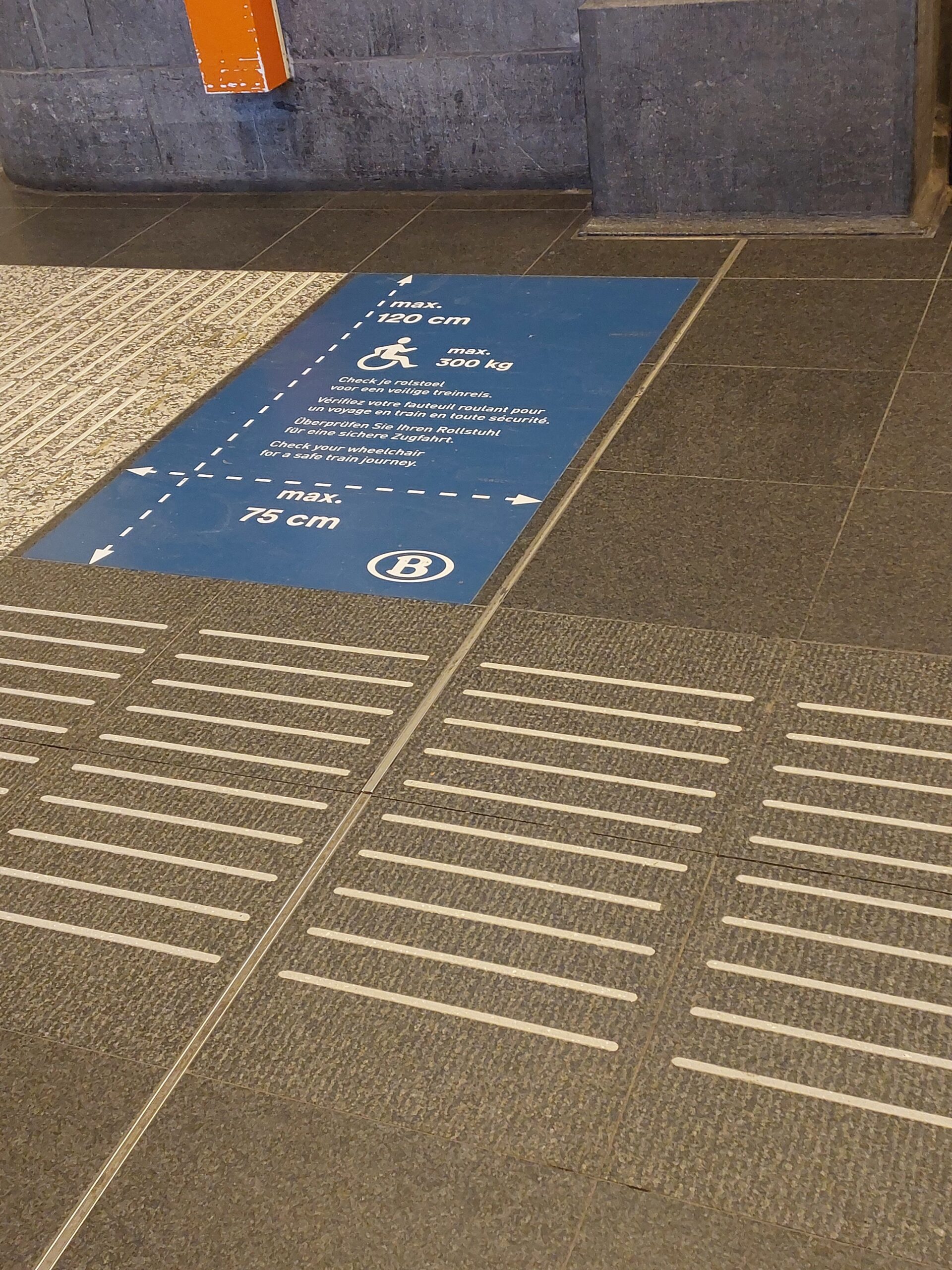
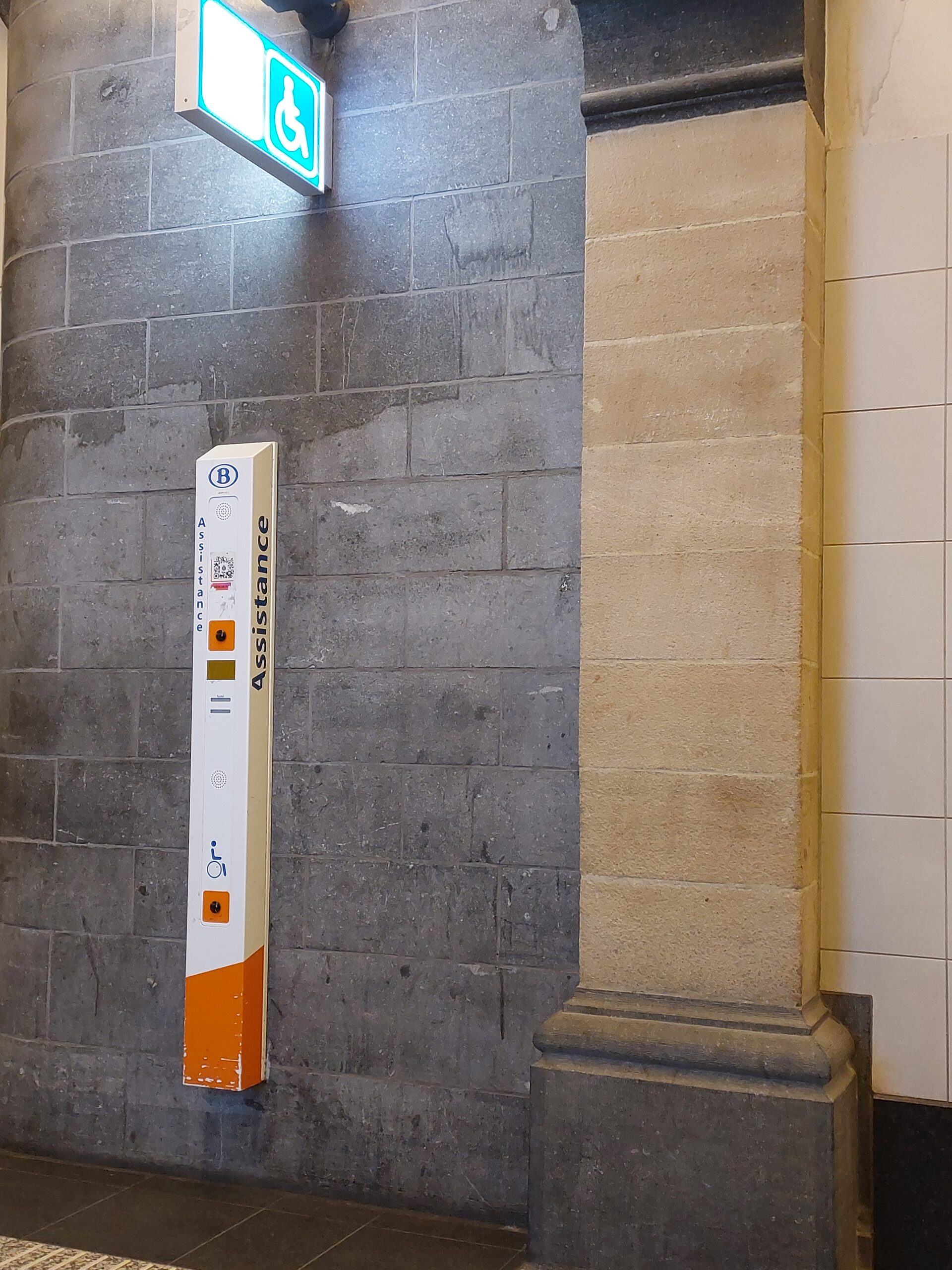
From Ghent, we reach Bruges in 20 minutes by train. In Brussels, I was able to buy all the train tickets we needed for the week and, at the same time, book assistance for boarding and leaving the train on our various journeys.
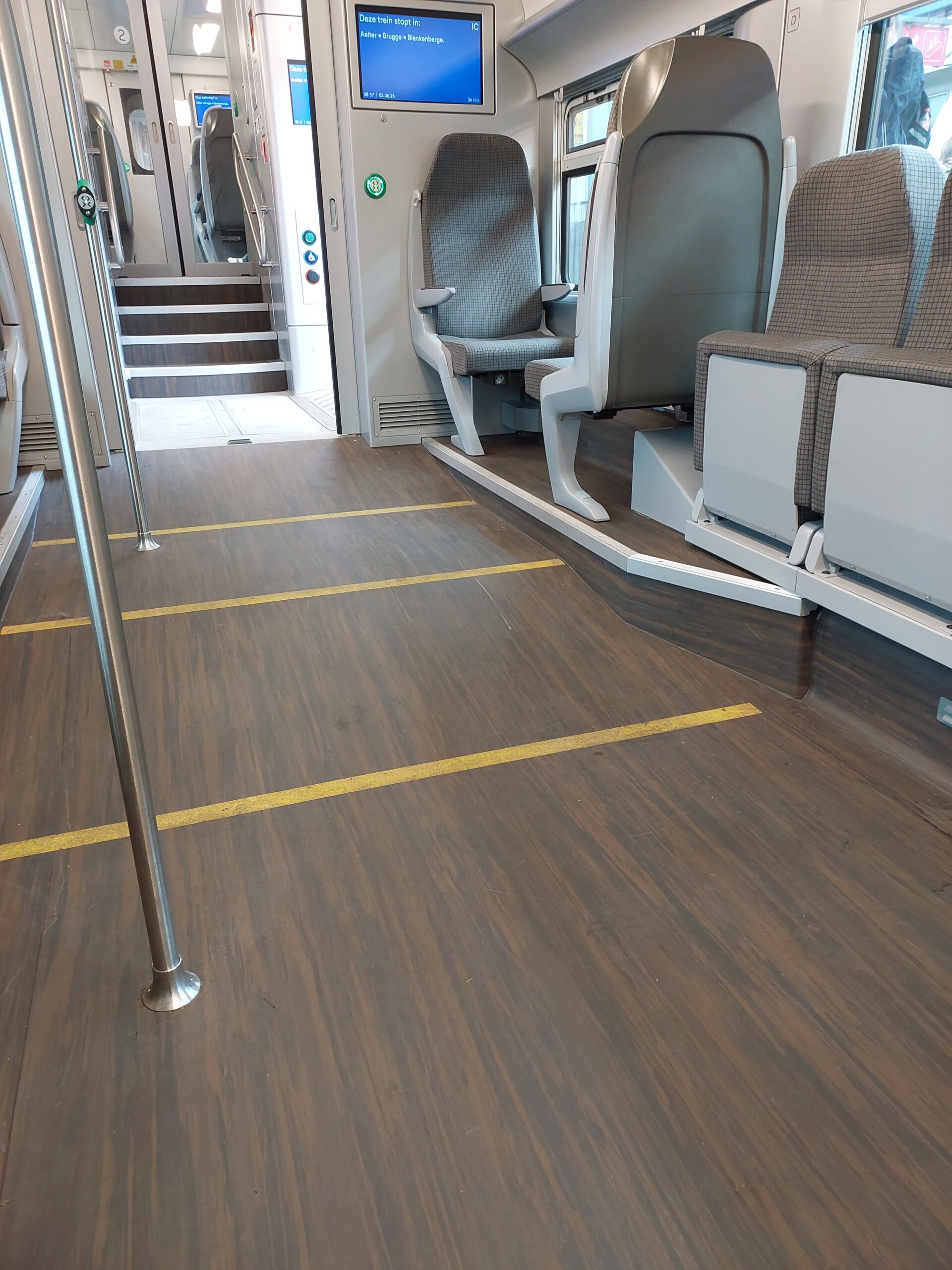
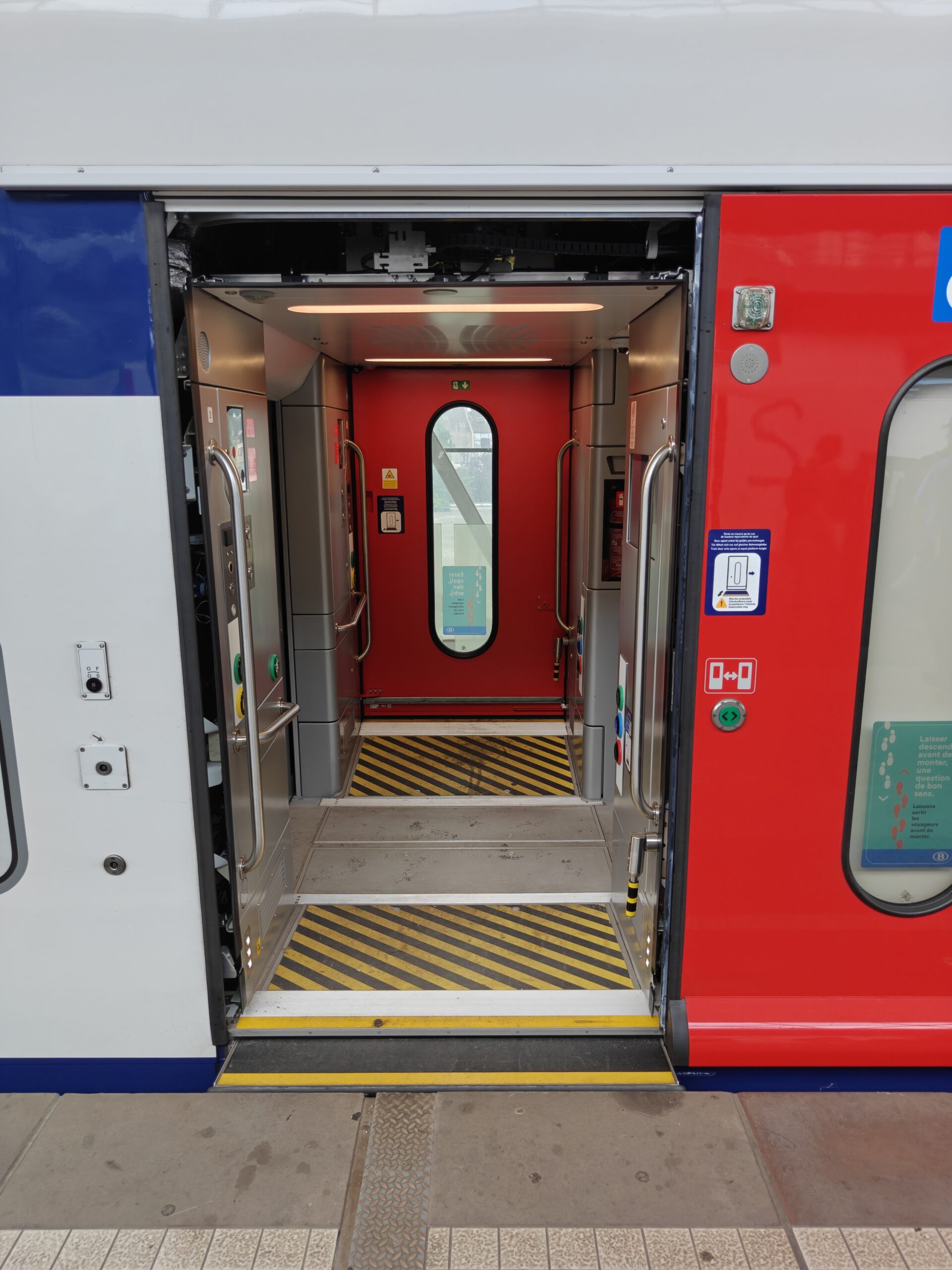
At each station, there is an intercom that allows us to announce our arrival. A member of staff then accompanies us to the platform and helps us onto the train. Some trains offer almost step-free access from the platform. Others are older and have several steps, which makes them more difficult to access. But nothing that cannot be managed with a portable ramp or lifting platform.
Once we arrive in Bruges, we head towards the centre, which is about fifteen minutes from the station.
We pass through Minnewater Park, which runs alongside a waterway, before exploring the charming streets of the city centre and walking along the canals. It is far more accessible than I remembered, as the old uneven cobblestones have been replaced with flatter ones.
The weather is a little temperamental, so we alternate between visiting churches – the Church of Our Lady, Saint Saviour’s Cathedral and the Basilica of the Holy Blood – and the Museum of Fine Arts, the Groeningemuseum, as well as the Town Hall, which has a magnificent neo-Gothic reception room.
Before returning to the station, we pass through the Beguinage, which, like every good beguinage it seems, has very small and very uneven cobblestones and is therefore not very wheelchair-friendly.
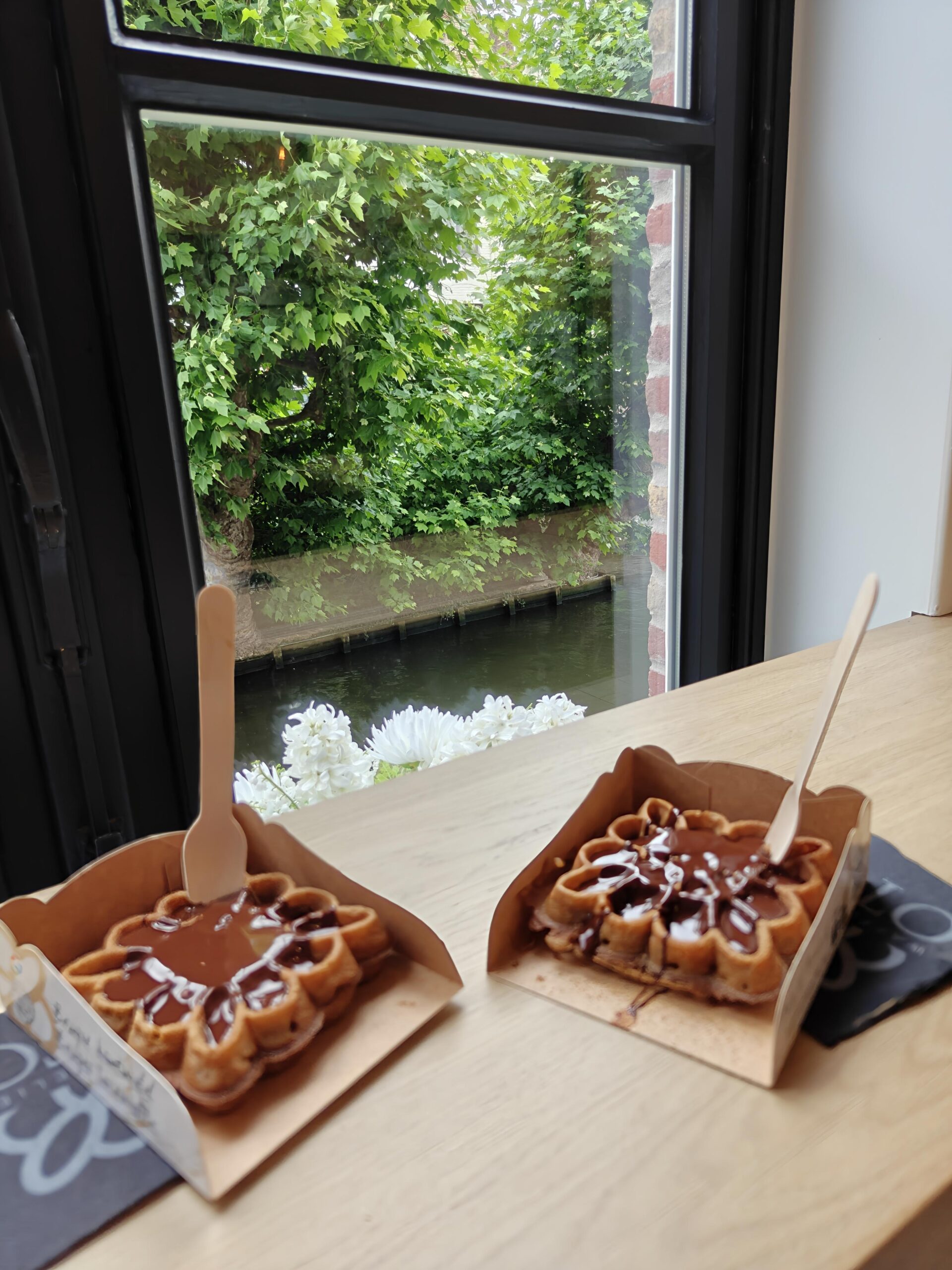
Needless to say, we take the time for a waffle break at Otto Waffle Atelier, a café that serves only gluten-free and vegan waffles. Absolutely delicious!
Day 5 : Ghent
Ghent does not seem as accessible to us as Bruges. Some of its cobblestones are older, and the tram tracks do not make crossing the streets any easier.
We start at Saint Bavo’s Cathedral, where we discover the magnificent Ghent Altarpiece. The route is completely accessible: after virtual-reality animations in the crypt, the altarpiece can be reached via a lift and ramps that are in very good condition.
We then continue exploring the historic centre: Geeraard de Duivelsteen, which is not accessible, the Patershol district and its many cobblestones, the Castle of the Counts, the Graslei quays and the Korenmarkt.
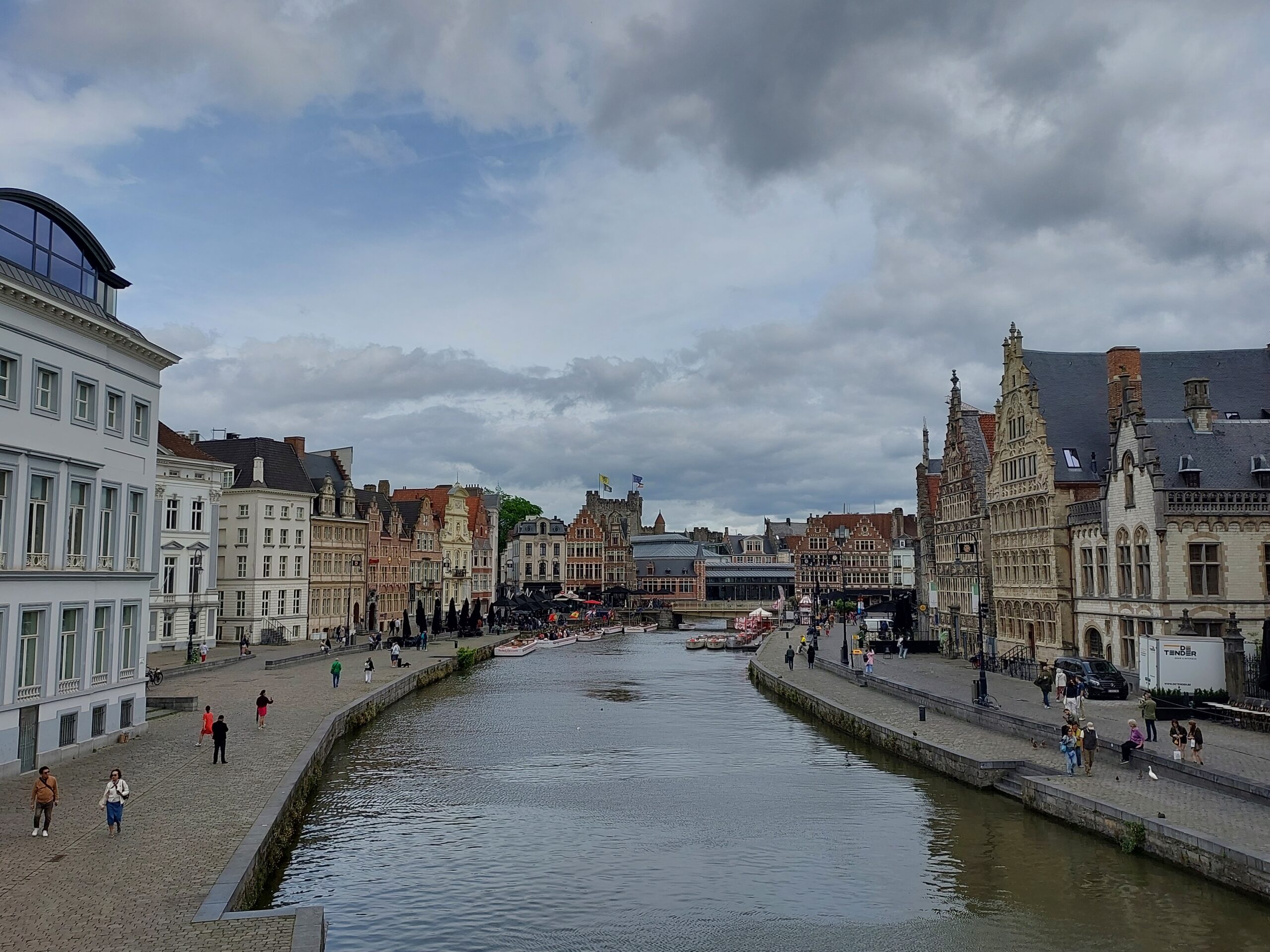
From St Michael’s Bridge, we enjoy a beautiful view of the quays and the city’s main towers. After stopping at St Michael’s Church, we end our visit to Ghent at the Museum of Fine Arts before taking the train to Antwerp, where we spend the final days of our trip.
Day 6 : Antwerp
We start the day with breakfast at Glutenvrije Bakkerij PastryLab, a completely glutenfree bakery where everything is delicious 😊
As the weather is not really great, we then head to the Royal Museum of Fine Arts Antwerp (KMSKA), which is very accessible.
This first dose of art is followed by a visit to the Museum Mayer van den Bergh, which houses the private collection assembled by Fritz Mayer van den Bergh at the end of the nineteenth century. The museum is quite small, but not particularly accessible. Without assistance, I would have been unable to get over the step leading to most of its rooms. So I was lucky that my husband was there.
Day 7 : Antwerp and return trip to Vienna
For our final day, we return to PastryLab for breakfast. We might as well make the most of it: it is not every day that you find such a good completely gluten-free bakery 😊
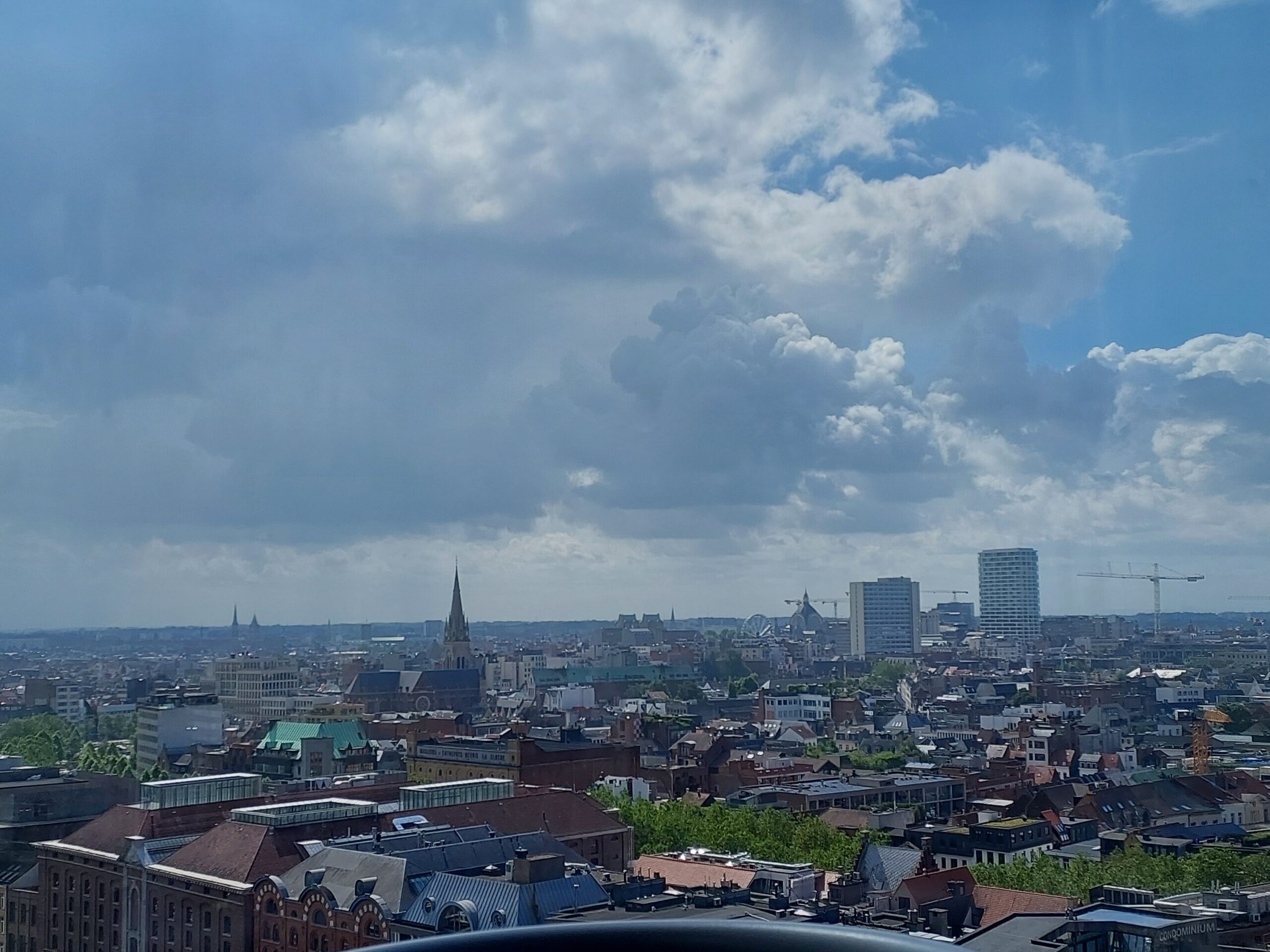
We then follow the Scheldt, passing St Paul’s Church, Steenplein and Het Steen, one of Antwerp’s oldest buildings. We end our visit at the MAS, the Museum aan de Stroom. We do not visit the collections, but go up to its panoramic terrace to enjoy the view of the city and the port.
The rest of the day is devoted to exploring the city centre. We pass the Beguinage, the Handelsbeurs, the Grote Markt and the Town Hall before looking at the entrance to Vlaeykensgang without venturing inside because of the cobblestones. We also make a detour via Groenplaats and the statue of Rubens, then visit the Cathedral of Our Lady.
It is then time to head back to Brussels, where our night train to Vienna departs.
Is Belgium wheelchair-accessible?
This week confirmed part of my initial impression: Belgium is quite well suited to travel by train, and many tourist attractions are wheelchair-accessible. The assistance at the stations allowed us to complete the various journeys we had planned, including on older trains that were less easy to access.
The overall picture in the different cities remains positive, even though older, less even cobblestones can become problematic. Travelling before the peak tourist season certainly helped to make the city centres easier to navigate because they were less crowded. Bruges was the pleasant surprise of the trip: I remembered it as being far less accessible…
Brussels remains relatively easy to navigate, even though its historic centre has uneven cobblestones, slopes and narrow pavements. Ghent required a little more attention, particularly because of the old cobblestones and tram tracks. In Antwerp, most of our visits went smoothly, except at the Museum Mayer van den Bergh, where my husband’s assistance was absolutely essential.
Overall, however, the itinerary was entirely manageable in a wheelchair, particularly thanks to the very helpful assistance at the stations..
♿ Accessibility table – Brussels, Bruges, Ghent and Antwerp
This table reflects my experience during this trip. I was using a manual wheelchair and was being pushed.
| Place / Site | Accessibility level | Details |
| Brussels – Historic centre | 🟡 Moderate | Uneven cobblestones, steep slopes and sometimes narrow pavements. Manageable with assistance. |
| Brussels – Beer Lab Rooftop | 🟢 Good | Accessible by lift. |
| Brussels – Mini-Europe | 🟢 Good | Route well designed for wheelchairs and pushchairs. |
| Brussels – Atomium | 🟡 Moderate | Only one sphere is accessible by lift. |
| Brussels – Design Museum Brussels | 🟢 Good | Accessible museum with accessible toilets. |
| Brussels – Metro | 🟢 Good | Most of the stations we used were accessible, making it easier to get around. |
| Brussels – Magritte Museum | 🟢 Good | Accessible route across several floors. |
| Brussels – Royal Saint-Hubert Galleries | 🟡 Moderate | Wheelchair-friendly, but access was provided by a plank used as a ramp. |
| Bruges – Historic centre | 🟢 Good (overall) | Flatter cobblestones than expected and a route that is generally wheelchair-friendly. |
| Bruges – Beguinage | 🔴 Difficult | Very small, uneven cobblestones that are difficult to navigate in a manual wheelchair. |
| Ghent – Historic centre | 🟡 Moderate | Old cobblestones and tram tracks make some street crossings more difficult. |
| Ghent – Saint Bavo’s Cathedral and the Ghent Altarpiece | 🟢 Good | Accessible route with a lift and ramps in good condition. |
| Ghent – Geeraard de Duivelsteen | 🔴 Not accessible | The building was not accessible, but it was possible to enter the cobbled courtyard. |
| Ghent – Patershol district | 🟡 Moderate | Numerous cobblestones make getting around less comfortable. |
| Ghent – Museum of Fine Arts | 🟢 Good | The museum is easily accessible by wheelchair and has accessible toilets. |
| Antwerp – Historic centre | 🟢 Good | Large, flat cobblestones in most of the streets in the historic centre. |
| Antwerp – KMSKA | 🟢 Good | Very wheelchair-accessible. |
| Antwerp – Museum Mayer van den Bergh | 🟡 Moderate | A step leads to most of the rooms. Visiting is difficult, if not impossible, without assistance. |
| Antwerp – MAS panoramic terrace | 🟢 Good | The panoramic terrace is accessible without visiting the collections. |
| Antwerp – Cathedral of Our Lady | 🟢 Good | Easily accessible. |
Pictures by the author.
If you want to support and promote my blog, do not hesitate to buy one of my books: Un bac sous perfusion (disponible en format papier et en e-book) ou Wheelchair hop on hop off (also available in paper format and as an e-book).